Om_hometown_v0.77.7z May 2026
We make travel easy for Travelers, Students, Digital Nomads and Travel Agents
We have helped more than 1 000 000 travellers and 200+ Travel and Visa agents
Flight Reservation
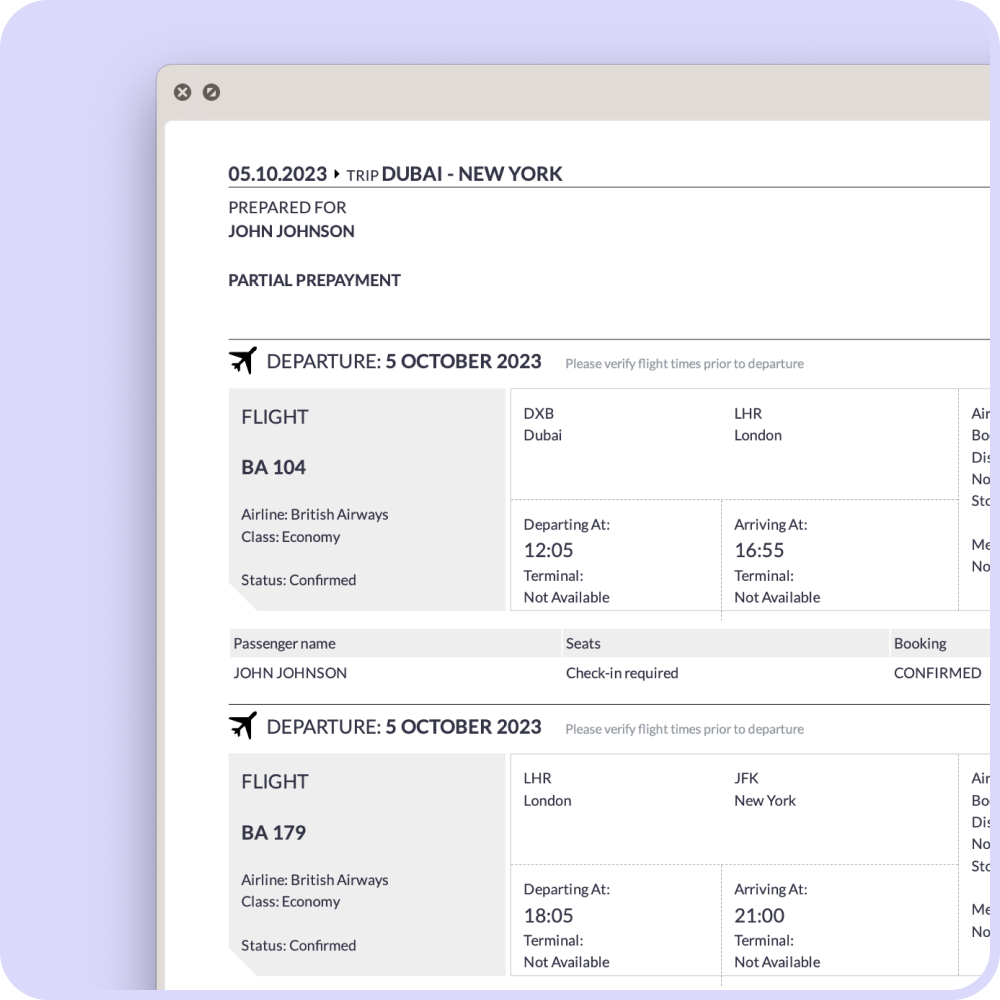
Flight bookings with a verifiable PNR number can help travelers obtain a visa and enter a country. The PNR is a unique identifier that can verify a ticket has been booked and show proof of plans to leave the country. This can help make entry into a country stress-free.
Reservation can be checked on the airline's website or GDS, such as checkmytrip.com or viewtrip.travelport.com
- Verifiable ticket with PNR number
- Reservation code will be valid for a maximum of 14 days
- One ticket may include up to 4 passengers
- You will receive your ticket within 24 hours
Get Flight Reservation
Sample ticket
A sample/onward/dummy ticket is a ticket for a future flight. It looks like a real ticket, but it does not have a PNR code, meaning it is not verifiable.
- Instant flight ticket creation
- With a flight price on a ticket
- Non verifiable ticket
Try for Free
Examples of usage
Travel Visa
Onward Ticket
Business Trip Confirmation
Travel Agency
Travel Visa
In many cases, a flight reservation is an important aspect of the visa application process, as it can provide evidence that you have concrete plans to travel. By having a flight reservation, the issuing authority can better assess the applicant's intent to travel, as well as their ability to pay for the flight and other related expenses. Ultimately, a flight reservation can be a useful tool for visa applicants, as it can help demonstrate their commitment to traveling and complying with visa regulations.
Onward Ticket
It's a common requirement, and many countries require travelers to present a flight reservation or ticket for their onward journey when they arrive. This helps to demonstrate that the traveler has the financial means to pay for the journey and that they have a definite plan for their stay. It can also help authorities feel more secure in the knowledge that the traveler will not overstay their allotted time in the destination country.
om_hometown_v0.77.7z
Business Trip Confirmation
It's a common requirement that many organizations have when booking a business trip, as they want to make sure that you are actually scheduled to fly and that you will be present for the duration of the trip. Having a flight reservation is a way of providing this confirmation and is often used in the process of obtaining a visa or other travel documents. It's important to keep in mind that having a flight reservation does not guarantee you a seat on the flight, and you may still need to purchase a ticket to board the plane.
The file appeared on Elias’s desktop at 3:14 AM
Travel Agency
Our team of experts will work with you to ensure that your clients' flight reservations are confirmed and guaranteed, giving you the peace of mind that comes with a successful visa application. Our fast and efficient service means that you can quickly and easily secure the flight reservations you need, without any hassle. Special prices coming soon.
When the monitor flickered back to life, the file was gone
Om_hometown_v0.77.7z May 2026
The file appeared on Elias’s desktop at 3:14 AM. No download notification, no email attachment—just a grey icon labeled .
The screen went black. When the monitor flickered back to life, the file was gone. In its place was a new folder, labeled with today’s date and the current time.
This is a story inspired by the mysterious file name "om_hometown_v0.77.7z," a title that evokes the eerie aesthetics of "lost media" and experimental indie horror. The Archive of Nowhere
Elias reached out to touch the power button, but his hand felt strange—numb and blocky. He looked down and saw his fingers were beginning to pixelate, his skin turning into the muddy, low-res texture of an unfinished world. He wasn't in his office anymore. He could hear the rhythmic crunch of gravel, and the distant, mournful chime of a clock. He was finally home.
Elias moved the character forward. The town was a perfect replica of his own childhood neighborhood, right down to the crooked mailbox at house 402. But there were no NPCs. No birds. Just a heavy, digital silence.
When he ran it, the screen didn’t flicker or glitch. Instead, it faded into a low-poly, fog-drenched rendering of a suburban street. The graphics were dated—muddy textures and jagged edges—but the sound design was hyper-realistic. He could hear the rhythmic crunch of gravel underfoot and the distant, mournful chime of a wind-up clock.
A chill that had nothing to do with the room’s draft swept over him. He hadn't lived in that house for fifteen years. He moved the camera to look through the front window. Inside the low-res living room, a figure was sitting on the sofa. It wasn't a monster or a ghost; it was a perfectly rendered, high-definition model of Elias himself, sitting in the dark, staring directly into the "camera" of the game.
What our customers say
MESSAGES
Andrea Botez
I made a reservation for $21,90. There were no problems with this ticket at the border control.
MESSAGES
Anna Darovski
Very fast in delivering services ⚡
MESSAGES
Marijana
Hi, I bought a ticket on this site 2 days ago. The guys helped to make a difficult reservation, although they warned that the reservation could only work for a couple of days.
MESSAGES
Artem Svirchevskiy
Everything went amazing! I wasn't too nervous when an airline employee checked the return ticket by checking my booking number. I was flying to Thailand before Christmas and didn't want to get stuck at such a crazy time when tickets cost overprices. Booked on a key flight for just $21,90, and it's worth it. Thanks to the service and its creators.
The file appeared on Elias’s desktop at 3:14 AM. No download notification, no email attachment—just a grey icon labeled .
The screen went black. When the monitor flickered back to life, the file was gone. In its place was a new folder, labeled with today’s date and the current time.
This is a story inspired by the mysterious file name "om_hometown_v0.77.7z," a title that evokes the eerie aesthetics of "lost media" and experimental indie horror. The Archive of Nowhere
Elias reached out to touch the power button, but his hand felt strange—numb and blocky. He looked down and saw his fingers were beginning to pixelate, his skin turning into the muddy, low-res texture of an unfinished world. He wasn't in his office anymore. He could hear the rhythmic crunch of gravel, and the distant, mournful chime of a clock. He was finally home.
Elias moved the character forward. The town was a perfect replica of his own childhood neighborhood, right down to the crooked mailbox at house 402. But there were no NPCs. No birds. Just a heavy, digital silence.
When he ran it, the screen didn’t flicker or glitch. Instead, it faded into a low-poly, fog-drenched rendering of a suburban street. The graphics were dated—muddy textures and jagged edges—but the sound design was hyper-realistic. He could hear the rhythmic crunch of gravel underfoot and the distant, mournful chime of a wind-up clock.
A chill that had nothing to do with the room’s draft swept over him. He hadn't lived in that house for fifteen years. He moved the camera to look through the front window. Inside the low-res living room, a figure was sitting on the sofa. It wasn't a monster or a ghost; it was a perfectly rendered, high-definition model of Elias himself, sitting in the dark, staring directly into the "camera" of the game.