epanet-js
No installs. No forced cloud storage. Just fast, local-first water modeling — powered by the engine you already trust.
You shouldn't have to choose between speed, security, and affordability just to understand your water networks.


However, the consumption of this specific genre is often criticized for its potential to reinforce harmful stereotypes and dehumanize transgender people. The use of the word "tranny" is a significant point of contention. Historically, this term has been used as a slur to mock, marginalize, and incite violence against transgender individuals. Its presence in the titles of adult films often signals a "chaser" culture—where transgender people are sought out solely for their physical attributes or the novelty of their gender identity, rather than being treated as whole human beings. This fetishization can lead to a reductive view of the trans experience, framing it entirely through a lens of sexual utility.
In conclusion, the genre labeled as "tied up tranny" occupies a controversial space in contemporary media. It sits at the crossroads of sexual freedom and the ongoing struggle for transgender dignity and safety. While adult content will always push the boundaries of social norms, the language and themes used in this specific niche highlight the need for a critical look at how marginalized identities are represented. Moving forward, the conversation surrounding such media must balance the right to sexual expression with the necessity of respect and the rejection of dehumanizing language. tied up tranny
Furthermore, the "tied up" or bondage element adds another layer of complexity. While bondage is a consensual practice for many, its depiction in pornography involving marginalized groups can sometimes mirror or trivialize real-world violence. Transgender people, particularly trans women of color, face disproportionately high rates of physical assault and systemic abuse. When media consistently portrays these individuals in positions of helplessness or restraint, it can inadvertently normalize the idea of trans bodies as objects to be controlled or dominated. This creates a tension between the freedom of sexual fantasy and the ethical responsibility to avoid tropes that mirror real-life oppression. However, the consumption of this specific genre is
From one perspective, the existence of such content can be viewed as an outlet for sexual exploration and the expression of specific kinks. In a world where sexual diversity is increasingly recognized, adult media provides a space for individuals to explore fantasies that may not be represented in mainstream culture. For some, the intersection of trans-identity and bondage is a legitimate area of sexual interest that emphasizes power dynamics and physical sensation. Proponents of this view might argue that as long as the content is produced ethically and with the consent of all performers, it remains a valid form of sexual expression. Its presence in the titles of adult films
EPANET was a gift to the industry — free, open-source water modeling for all. But commercial vendors built on it, locked away improvements, and left the community behind.
epanet-js is our answer: a faster, simpler, affordable water modeling tool that protects your privacy and sustains the open-source future of water modeling.
We're proud to be part of the next chapter — and we're just getting started.

When you purchase more features in epanet-js, you're investing in the future of open-source EPANET development.
Our open-source model balances innovation and accessibility:
Anyone can build on our code. The two-year commercial-use delay gives us the incentive to keep pushing forward — and that fuels progress for everyone.
That means when you support us, you support more affordable hydraulic modeling software for the entire community.
Choose the plan that works for you
Individual named license
Floating shared license
Have questions? or book a call.
Available for non-commercial projects, learning, and student work.
For curious minds and personal growth.
Free for students and teachers.
Find answers to common questions about epanet-js.
You may not know this, but for decades, the U.S. EPA has given the water industry an extraordinary gift: the free and open-source hydraulic modeling software EPANET. Odds are, if you've used any commercial hydraulic modeling software today, it was built on the EPANET engine.
The problem is, instead of giving back to their open-source roots like other industries do, big-name software vendors took EPANET's open code, built private tools on top of the engine, and then locked those improvements behind patents and proprietary licenses.
Some vendors even pressured the EPA to focus only on the engine — discouraging any effort to improve the interface or user experience for everyone else.
Those vendors now charge you exorbitant prices to use their software while EPANET lags behind — and utilities, engineers, and educators with smaller budgets suffer.
We think this is backwards — and we're on a mission to change it. We're focused on creating a better experience for the entire hydraulic modeling community.
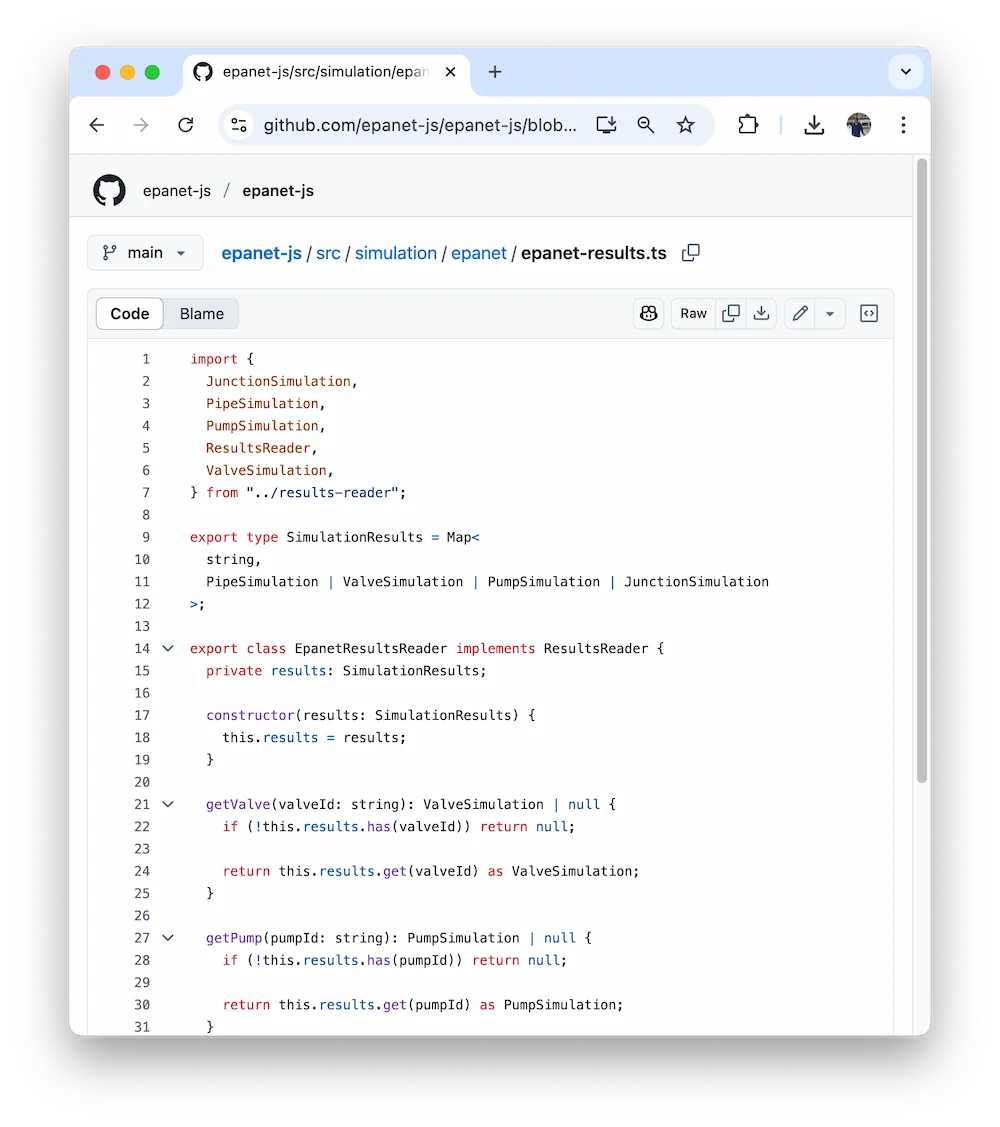
That's why we built epanet-js under an FSL license — because we want to give you an affordable, easy-to-use water modeling option that creates a sustainable future for open-source EPANET development.
Support EPANET by using software that supports it back.
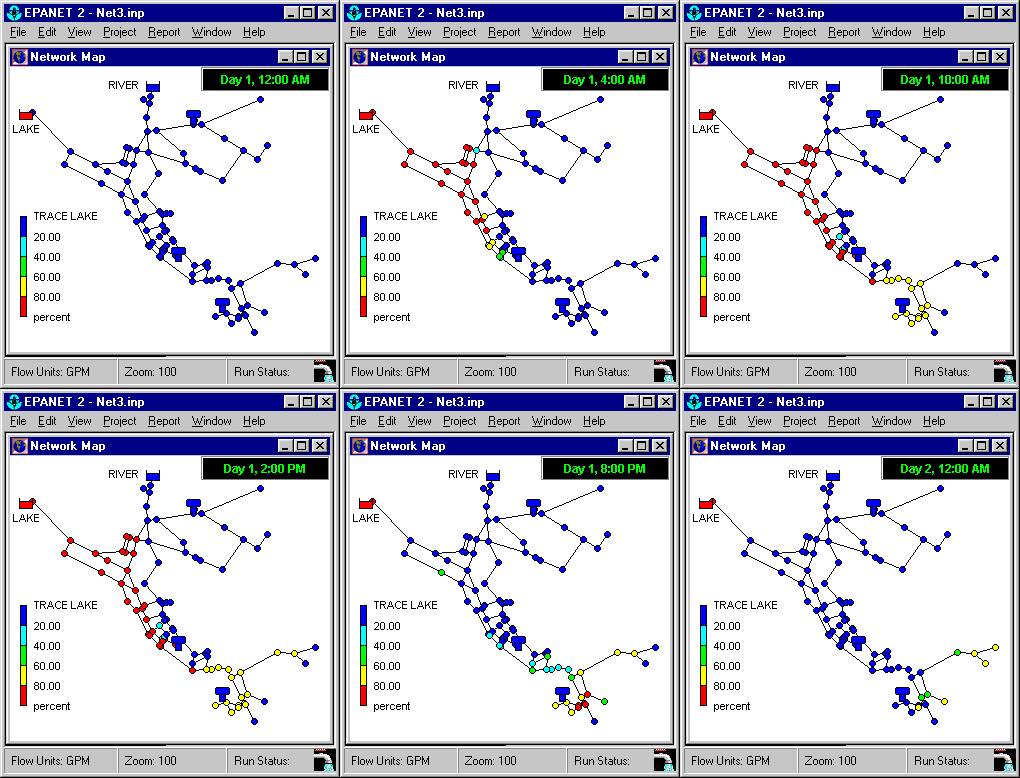
Simple, quick, and useful right out of the gate — designed to open-and-go.
Launch epanet-js now